
“The creative worked. Just not with the customers who mattered most.”
Stride North was launching a €129 daily running shoe. This demonstration simulates 15,000 profiles across four audience cohorts to surface an objection hidden by the aggregate.
A realistic scenario built to show the level of detail of the final report.
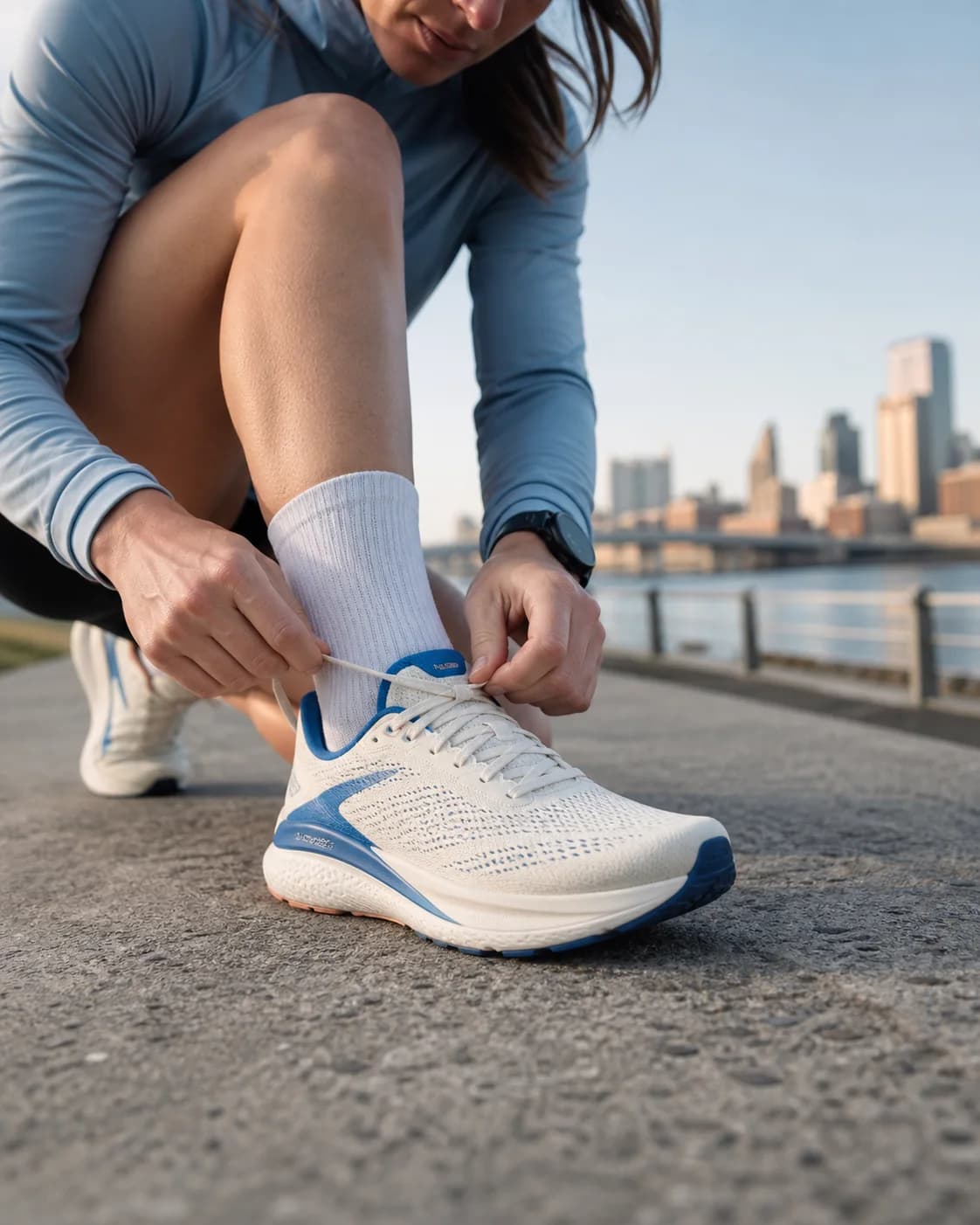
The daily trainer that keeps your rhythm.
Daily trainer · 268 g
15,000 simulated profiles
The signal hidden by the average
The context
Stride North, a fictional DTC brand, is preparing to launch an everyday running shoe. Its target is not one homogeneous block: it includes people returning to running, comfort-led runners, progression-focused profiles, and newer runners drawn in by style.
The demonstration models a realistic target structure — running frequency, online purchase history, choice criteria, and objections — without using personal data. It shows how to assess not only whether an ad is liked, but who it would actually move toward purchase.
The launch creative
“Get back to running. Keep the rhythm.”
A premium lifestyle photograph, an emotional promise, and a highly visual Shopify product page. The product is desirable, but stability, sizing, and trial information sit below the fold.
Protocol
Each reaction is generated in the target audience context, then aggregated without hiding minority objections.
What a 15,000-agent panel simulates
The simulated overall score of 62 hides a 36-point gap. Style-led new runners score the creative 78. Returning runners — the segment with the strongest pre-existing intent — fall to 42 because they cannot validate stability or fit.
In this demonstration, 15,000 synthetic profiles represent four behavioral cohorts in the target audience proportions. The scenario exposes every cohort to the same ad followed by the same product page.
Primary score
62/100
Cohort view
Audience share
Returning runners
Stability and sizing cannot be verified
31%
42/100
Everyday comfort
Cushioning appeals; outdoor trial is hard to find
27%
66/100
Progression
Weight and intended use expected before purchase
24%
71/100
Style & first pair
Highly desirable creative with little friction
18%
78/100
Critical signal
The overall average hides a 36-point gap: 78/100 among new runners, 42/100 among returning runners.
Panel reactions
“I like the shoe, but I cannot tell whether it is stable enough for my regular runs.”
“I only order running shoes online when the size guide and post-trial return policy are completely clear.”
“The image makes me want to run. At €129, I still need more concrete proof before buying.”
The decision
Build a returning-runner variant and move fit proof above the price.
Optimizing the average would have reinforced the lifestyle angle, which already worked. The cohort view shows the opposite priority: reassure the segment most ready to buy with heel stability, shoe weight, sizing guidance, and trial terms on the first screen.
The segmented re-test
The revised variant keeps the visual energy but adds four immediate proofs: heel stability, shoe weight, sizing recommendation, and a 30-day outdoor trial.
Returning runners · initial
42
/100
Returning-runner variant
86
/100
Simulated improvement
+44 pts
Changes tested
- Hook centered on returning to a routine rather than style alone
- Heel stability and daily use made explicit in the ad
- Size guide moved above the add-to-cart button
- 30-day outdoor trial terms shown before the price
“I understand what kind of runs it is made for, I know how to choose my size, and I can test it outside. Now I can decide.”
Next case
"Why my Reel looked good but didn't sell"
Find the correction worth testing.
Upload a creative, describe the audience, and get one priority decision before committing budget.
Test a creative for free